
Calgary is building the supply network behind peptide science, and purity testing sits at the center of it. Reliable analytical capacity, from reference standards to chromatography and mass spectrometry services, is what lets a local research cluster move from promising work to results other labs, regulators, and buyers will trust. For investors and site selectors, that makes this an infrastructure story as much as a science one.
Suppliers such as Researched Peptides reflect the demand for materials that are documented, traceable, and verified before they reach a bench. Purity testing is the quality gate. Without it, a research project can lose months chasing results that trace back to an impure batch.
What changed is the depth of the local ecosystem. Calgary’s energy, life sciences, and technology sectors increasingly overlap, and that overlap is drawing in laboratory suppliers, testing providers, and logistics partners who benefit from working side by side. Confirm specific facilities, funding announcements, and timelines against current sources before relying on them.
This article breaks down four developments shaping the network, what they mean for business growth at home and abroad, and where partners can look for the next opportunities.
What Changed: Calgary’s Shift Toward a Peptide Testing Ecosystem

For a long time, regional support for life sciences meant helping individual labs get started and stay funded. What is changing in Calgary is the focus. Attention is moving from the single lab to the network around it: the suppliers, service providers, and skilled people that a peptide testing operation can’t run without.
Peptide purity testing shows why that matters. A peptide is a short chain of amino acids, and before it goes into research or product development, someone has to confirm it is what it claims to be. Labs check its identity, measure how pure the sample is, and look for impurities that could skew results or raise safety questions. The workhorses are chromatography, which separates a sample into its components, and mass spectrometry, which weighs those components precisely. Each step leans on a steady supply of specialized inputs.
That is where the connected network comes in. Instruments need calibration and servicing. Reagents, solvents, and reference standards have to be high-purity and delivered on time. Consumables run out constantly. Many samples and materials travel in temperature-controlled conditions, so cold-chain logistics become part of the lab’s day-to-day reliability. And none of it works without technicians who know how to run the equipment and read the results.
When these pieces sit close together, a testing company spends less time chasing parts and more time delivering results. Collaboration among suppliers, lab operators, post-secondary partners, and regional economic development groups is what turns a handful of labs into an ecosystem.
Specific announcements and program details should be confirmed against current, verified sources before you rely on them. The broader direction, from standalone labs to a linked supply network, is the shift worth watching.
Key Developments Shaping the Supply Chain
1. Building Local Access to Lab Instruments, Reagents, and Consumables
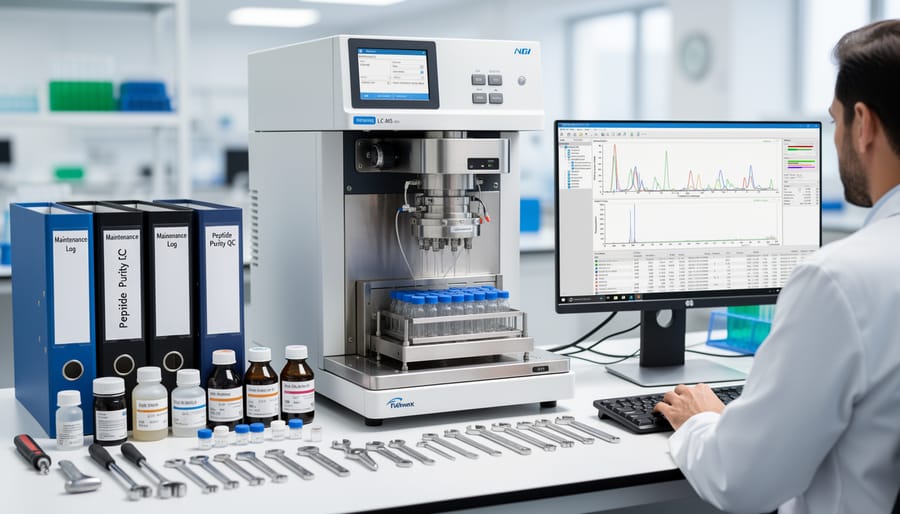
Peptide purity testing runs on a steady flow of supplies, and the closer those supplies sit to the lab, the smoother the work goes. When a testing firm can source what it needs from regional suppliers, it spends less time waiting on shipments and less money holding emergency stock. That has a direct effect on the cost of business, and it makes the region more appealing to operators weighing where to set up.
A peptide testing lab typically depends on a handful of core components:
- Analytical instruments such as chromatography and mass spectrometry systems
- Reference standards used to confirm identity and measure purity
- High-purity solvents and reagents
- Consumables like columns, vials, and filters
- Calibration and maintenance services to keep instruments performing reliably
- Temperature-controlled logistics for sensitive samples and supplies
Each item on that list is a place where local access pays off. A column that fails midweek or a solvent lot that runs short can stall a whole testing schedule. Nearby suppliers and service providers shorten that gap, and technicians who can service equipment on site keep instruments running between runs.
Regional partners play a practical role here. Economic development organizations, industry associations, and local business networks can introduce suppliers to lab operators, share information on what testing firms actually need, and help new entrants find established service providers. For suppliers, those connections open a clear path to new customers. For labs, they mean a more dependable, better-connected supply base built through collaboration rather than one-off transactions.
2. Strengthening the Skilled Workforce Pipeline
Purity testing is only as strong as the people running it. Analytical chemists develop and validate methods, lab technicians prepare samples and operate chromatography and mass spectrometry instruments, and quality assurance specialists keep documentation, calibration records, and traceability in order. When any one of those roles is thin, turnaround times slip and client confidence follows.
That is why talent development sits alongside supplier access in any serious lab ecosystem. Calgary-area post-secondary institutions offer programs in chemistry, biological sciences, and laboratory technology, and these are natural feeders for peptide analysis roles. Employers who want to confirm which specific programs align with their needs should check current offerings directly with each institution.
Practical partnerships make the difference. Co-op placements, internships, and apprenticeship-style arrangements let students learn on real instruments before graduation, while employers gain early access to emerging talent. For firms planning to staff up, understanding the realities of hiring recent grads can help shape onboarding and mentorship plans that turn strong academic backgrounds into hands-on lab competence.
Broader workforce trends also matter, since competition for technical talent affects recruitment timelines and retention strategies. Business, education, and economic development partners working together can keep the pipeline steady as the sector grows.
3. Aligning Quality Systems and Regulatory Readiness
For a peptide purity testing lab, the quality of a result can only be as good as the materials behind it. That is why quality systems often shape purchasing decisions as much as price or delivery time. Labs typically want reference standards, solvents, and consumables that arrive with certificates of analysis, lot numbers, and clear records of how they were handled. When a result is questioned, that paper trail lets a lab show exactly what went into it.
Traceability matters just as much for the supply chain itself. Sensitive reagents and standards can lose integrity if they are not kept within the right temperature range in transit, so documented handling is part of quality, not an extra. Resources such as Temperature-controlled shipping best practices give a useful picture of what careful, well-recorded logistics looks like.
This is where a regional supply network earns credibility. Suppliers who understand documentation expectations and can provide consistent, auditable sourcing make it easier for local labs to meet the standards their clients expect, including clients based abroad. Businesses entering the market also benefit from understanding local requirements early, and it helps to get the licence right before ordering and operations scale up. A region that treats quality as shared infrastructure is simply easier to trust.
4. Connecting Logistics and Regional Infrastructure
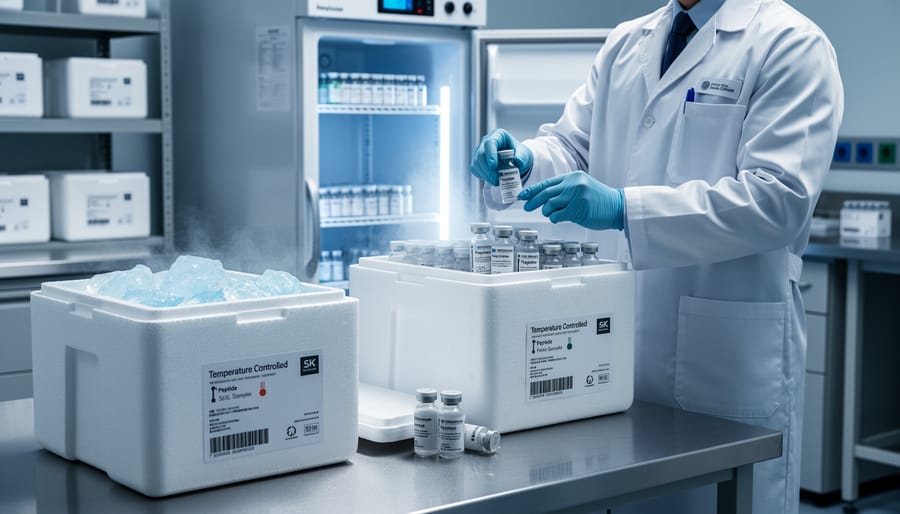
Peptide testing depends on moving small, time-sensitive things reliably: incoming samples, reference standards, and supplies that often need to stay cold from the moment they leave the supplier. That makes logistics a practical concern for any lab operator weighing where to locate, not just a background detail.
Calgary’s position as a transportation hub works in its favour. The region is served by Calgary International Airport, which handles both passenger and cargo traffic, along with major highway corridors and rail connections that link Alberta to the rest of Canada and the United States. For a testing firm, that means more options for getting samples in and results or materials out, whether the client is across the province or across the border.
Temperature-sensitive supplies add another layer. Cold-chain carriers, packaging specialists, and courier services all help keep sensitive materials within required conditions, and a deeper pool of these providers reduces the risk of delays or compromised shipments. When local labs can count on predictable transit times, they can plan instrument time and staffing with more confidence.
Before publication, any specific figures about airport cargo capacity, route counts, or carrier services should be confirmed against current sources from the airport authority and regional partners. What holds true regardless is the broader point: strong logistics links make it easier for local and international businesses to work together, and that connectivity is a quiet but meaningful part of the peptide supply chain story.
Why It Matters for Businesses, Investors, and Communities
A stronger lab supply chain does more than serve one niche. It gives Calgary another way to grow beyond its traditional economic strengths, with work that rewards technical skill and careful, repeatable process. Peptide purity testing is a good example, because it pulls in instrument suppliers, reagent and consumable vendors, calibration services, logistics providers, and trained analysts all at once.
For suppliers, a connected local network means steadier demand and closer relationships with the labs they serve. Distributors of analytical equipment, high-purity solvents, and reference standards can plan around regional customers instead of relying only on distant shipments. Testing firms benefit in return through shorter lead times, easier access to service and support, and fewer interruptions when a critical consumable runs short.
Investors gain a clearer picture of how the pieces fit together. A region with supplier access, a skilled workforce, and reliable logistics is easier to assess than one where those elements are scattered, and that clarity can lower the perceived risk of committing capital or opening a new facility. For international companies, a well-supported ecosystem offers a practical entry point: they can tap into local partners rather than building everything from scratch.
The effects reach beyond the lab bench. Analytical chemists, technicians, and quality specialists hold high-skill roles that tend to anchor careers locally, and they create demand for training programs and related services. Local government and community leaders have a role in making this work, from supporting workforce development to helping partners find one another.
None of this happens in isolation. The strongest results come when suppliers, testing firms, investors, educators, and public partners share information and plan together, so that growth in one area strengthens the others.
What to Watch Next as Calgary’s Peptide Lab Ecosystem Develops
The most useful way to follow Calgary’s peptide lab ecosystem is to track a handful of steady signals rather than waiting on a single headline. Each one points to whether the supply chain behind purity testing is deepening.
Start with supplier presence. When distributors of analytical instruments, reference standards, and high-purity reagents establish local inventory or service teams, testing firms feel the difference in lead times and uptime. Next, watch training. Expanded technician and analytical chemistry programs, along with employer partnerships, show whether the talent pipeline is keeping pace with demand.
Facility investment is another indicator. New lab space, shared equipment, and flexible build-outs lower the barrier for smaller firms, and shared-resource models can let emerging companies access chromatography and mass spectrometry capacity without carrying the full capital cost. Partnership announcements between suppliers, educators, and operators tend to signal where momentum is building.
For practical next steps, follow regional economic development updates and sector newsletters, and verify any announcement against current official sources. Map the suppliers, service providers, and talent you would rely on, then open conversations with local partners about gaps and shared opportunities. Businesses weighing entry or expansion benefit most from treating this as a collaborative effort, building relationships now so they are ready as the ecosystem matures.
Frequently Asked Questions About Calgary’s Lab Supply Chain
What is peptide purity testing?
It is the lab work that confirms a peptide is what it claims to be and measures how much of the sample is the intended compound versus impurities. Labs typically rely on chromatography and mass spectrometry to do this.
Why does a local supply chain matter to testing firms?
Nearby access to instruments, reagents, reference standards, and consumables can shorten lead times and make operations easier to plan. It also gives labs more options when a supply is delayed or a part needs servicing.
How can a business explore opportunities in the Calgary region?
A good starting point is to identify which part of the supply chain fits your strengths, such as supplies, logistics, calibration, or testing services. From there, reach out to regional economic development contacts and industry groups to learn who is already active and where gaps remain.
How can local and international companies collaborate with regional partners?
Joint ventures, supplier agreements, and shared-resource arrangements are common routes. Early conversations with local partners help international firms understand regional practices and help local firms understand what global clients expect.
Whichever question matters most to you, the common thread is connection. The strongest results tend to come when suppliers, labs, training providers, and community partners talk early and often about what each one needs.
Calgary is building a lab supply chain for peptide science and purity testing firms because the pieces that make analysis reliable, from instruments and reagents to trained technicians and dependable logistics, work best when they sit close together. The developments covered here, local supplier access, workforce growth, stronger quality systems, and better connected infrastructure, each add to a more credible base for testing operations.
None of this happens in isolation. Industry, educators, government, and community partners all shape the outcome, and the region benefits most when they move in step. If your business supplies, tests, or invests in this space, now is a good time to start conversations with regional partners and explore where you fit.