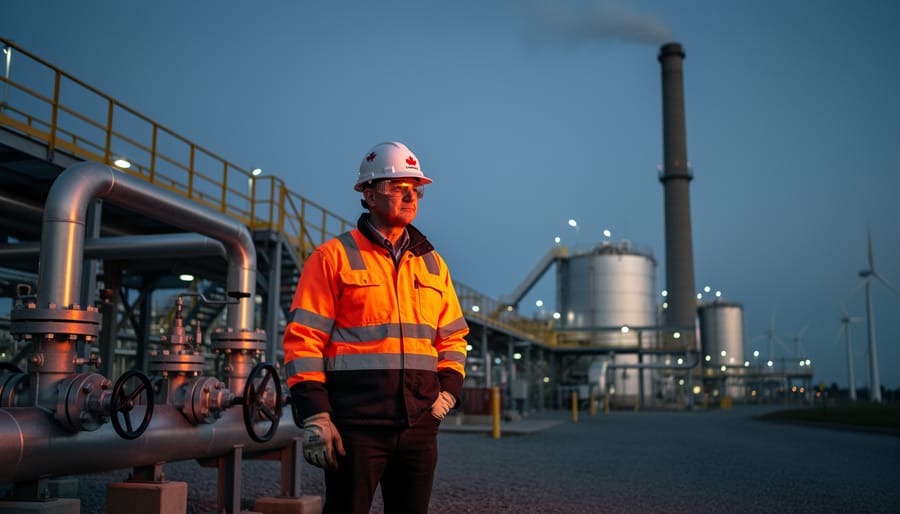
Plant operator workforce demand across the Prairies is surging in 2026, driven by accelerated growth in oil and gas processing, petrochemical expansions, and renewable energy infrastructure projects. Alberta, Saskatchewan, and Manitoba are experiencing a measurable shortage of certified power engineers and industrial plant operators, with energy companies and manufacturing facilities competing for talent in a market where demand consistently outpaces the supply of qualified candidates.
The workforce gap reflects several converging factors: an aging cohort of plant operators reaching retirement, expansion of carbon capture facilities, and new investments in hydrogen production and biofuel processing. Saskatchewan alone has seen industrial construction permits increase by double digits over the past year, requiring hundreds of Class 3 and Class 4 power engineers to staff these operations. Meanwhile, Alberta’s Industrial Heartland and Manitoba’s manufacturing corridor are both reporting extended hiring timelines as operators with specialized certifications become harder to recruit.
For business leaders, this tightening labor market means strategic workforce planning is no longer optional. Companies are partnering with technical colleges, offering enhanced compensation packages, and creating apprenticeship pathways to build their own talent pipelines. Economic development organizations across the region are prioritizing workforce development initiatives, recognizing that operator shortages can delay project timelines and limit industrial growth.
Job seekers with power engineering credentials face exceptional opportunities, with salary benchmarks reflecting the competition for their skills. Resources like powerengineeringpractice.com provide insight into compensation trends that continue to rise with demand. Understanding the current dynamics shaping this market is essential for anyone involved in Prairie economic development, industrial operations, or career planning in the energy sector.
What Changed: Rising Demand Signals Across the Prairies
The Prairie provinces experienced a marked upward shift in plant operator workforce demand during 2025, with momentum carrying into 2026. Employers across Alberta, Saskatchewan, and Manitoba reported persistent difficulty filling certified operator positions as project timelines accelerated and facility expansions came online. Job postings for plant operators rose 34% year-over-year in the energy corridor stretching from Edmonton to Regina, according to regional workforce data, while wage premiums for experienced operators climbed 12-18% above 2024 levels in competitive markets.
This surge stems from converging pressures rather than a single catalyst. Energy companies announced capacity increases at existing refineries and processing plants, requiring additional shift coverage and specialized operator credentials. Manufacturing facilities expanded operations to serve growing North American demand, particularly in petrochemicals, fertilizers, and food processing. Municipal and regional districts committed capital to water treatment upgrades and waste management modernization, creating steady openings for certified operators across communities of all sizes.
Apprenticeship program enrollments lagged behind hiring needs throughout 2025, widening the gap between available positions and qualified candidates. Several major employers reported delaying commissioning timelines or extending existing staff hours to maintain operations while recruiting continued. The mismatch between demand and supply signaled a structural workforce challenge rather than a temporary hiring spike, prompting industry groups and training institutions to reassess capacity and collaboration strategies for sustainable operator pipeline development.
Key Developments Shaping Operator Demand

1. Energy Sector Expansion and Facility Upgrades
The energy sector’s expansion across Alberta, Saskatchewan, and Manitoba has created immediate pressure on plant operator recruitment. Multiple refinery upgrades announced in 2026 require experienced operators who can manage complex processes during commissioning phases and ongoing operations. Edmonton-area facilities alone are adding capacity that demands an estimated 150-200 additional certified operators over the next 18 months.
Petrochemical facilities present particularly acute workforce needs. New methanol plants, fertilizer production facilities, and polymer processing operations require operators with specialized training in chemical handling, process monitoring, and emergency response protocols. Saskatchewan’s growing petrochemical corridor is experiencing competition for qualified candidates as multiple projects move from construction to operational phases simultaneously.
Pipeline operations and midstream infrastructure modernization compound the demand. Compressor stations, storage terminals, and processing hubs transitioning to automated systems still need skilled operators who understand both traditional process control and digital monitoring technologies. The upgrade cycle creates temporary demand spikes as facilities maintain existing operations while integrating new equipment.
Natural gas processing plants expanding capacity to meet export commitments represent another significant hiring driver. These operations require 24-hour staffing with operators holding specific tickets for pressure systems, refrigeration, and gas processing. The combination of expansion projects, retirement waves, and competition from other sectors has created the tightest operator labor market the energy sector has seen in five years.
2. Industrial Manufacturing Growth and Diversification
Manufacturing diversification across the Prairies is reshaping operator workforce requirements beyond traditional energy sectors. Food processing facilities in Saskatchewan and Manitoba have expanded production capacity significantly, with meat packing plants, grain processing operations, and dairy facilities requiring certified operators for automated systems, refrigeration plants, and wastewater treatment. These facilities demand operators skilled in process control, safety protocols, and regulatory compliance specific to food-grade environments.
Chemical manufacturing represents another growth area. Fertilizer production facilities, particularly in Saskatchewan’s potash corridor, continue expanding operations to meet global agricultural demand. These plants require operators trained in chemical handling, pressure vessel operations, and environmental monitoring systems. Alberta’s petrochemical sector is also diversifying, with new facilities producing plastics, resins, and specialty chemicals that need skilled operators for complex production processes.
Economic diversification initiatives across all three provinces have accelerated manufacturing growth in sectors like building materials, pharmaceuticals, and renewable energy equipment production. Each facility type brings specific operator certification requirements and technical skills that differ from conventional oil and gas operations. This diversification creates opportunities for operators willing to cross-train and pursue sector-specific credentials.
The manufacturing expansion provides career stability through sector diversity. When energy markets fluctuate, food processing and chemical manufacturing often maintain steady production schedules, offering operators alternative employment paths within the region rather than forcing relocation. Training institutions now emphasize transferable skills across multiple industrial sectors.
3. Infrastructure and Utility Projects Driving Hiring
Municipal infrastructure and essential services form a substantial pillar of plant operator demand that often receives less attention than energy projects but creates equally consistent hiring needs. Water treatment facilities across the Prairies are undergoing significant upgrades to meet population growth and regulatory standards, with operators required to manage increasingly sophisticated purification systems, monitor water quality parameters, and maintain complex treatment processes around the clock.
Waste management operations have expanded dramatically as cities tackle organic waste diversion, recycling facility automation, and landfill gas recovery systems. These facilities need certified operators who understand both traditional waste handling and emerging technologies like anaerobic digestion and material recovery systems. Saskatchewan’s municipalities particularly are investing in modern waste-to-energy infrastructure that demands operators skilled in combustion control and emissions monitoring.
Power generation facilities, including both traditional plants and renewable energy installations, represent another major operator employer. Coal-to-gas conversions, biomass facilities, and grid-scale battery storage systems all require operators who can manage generation equipment, coordinate with grid operators, and respond to system changes. Manitoba Hydro’s ongoing infrastructure projects and Alberta’s grid modernization initiatives have created sustained demand for power plant operators with diverse technical backgrounds.
Municipal water distribution networks, stormwater management systems, and district heating plants round out the infrastructure sector’s operator requirements. Smaller Prairie communities often struggle most to attract qualified operators for these critical services, making rural positions particularly important to fill as the region’s essential infrastructure depends on maintaining this specialized workforce across all communities, not just major urban centers.
Why This Matters for Prairie Economies

The surge in plant operator demand carries significant economic weight for the Prairies, extending well beyond individual hiring decisions to shape regional prosperity and competitiveness. As energy and industrial sectors expand capacity, the ripple effects touch wage dynamics, talent retention, and the ability of communities to capitalize on growth opportunities.
Plant operators rank among trending jobs across the region, with starting salaries for certified operators typically ranging from $65,000 to $85,000 annually, climbing to $100,000 or more with experience and specialized certifications. This wage pressure reflects genuine scarcity. When projects compete for the same pool of qualified operators, businesses face longer hiring timelines, increased recruitment costs, and potential project delays that can affect investment returns and competitiveness.
The economic stakes include:
- Direct job creation: An estimated 2,500 to 3,000 new plant operator positions needed across the Prairies by 2027
- Wage escalation: Average operator salaries increased 12 to 18 percent since 2024 in high-demand specialties
- Skills gap urgency: Current training capacity produces roughly 60 percent of the operators required to meet projected demand
- Investment risk: Major projects may shift to regions with stronger talent pipelines if workforce constraints persist
- Multiplier benefits: Each plant operator position supports approximately 2.3 additional jobs in supporting industries and services
For businesses evaluating expansion or relocation, operator availability now factors into site selection alongside traditional considerations like cost of business and infrastructure access. Communities that can demonstrate robust training programs and operator talent pipelines gain competitive advantage in attracting industrial investment.
The workforce challenge also presents collaboration opportunities. Economic development organizations, training institutions, and industry partners can work together to expand apprenticeship programs, create pathways for career switchers, and build the operator workforce needed to sustain growth. Given the region’s competitive cost of living compared to other energy hubs, the Prairies hold natural advantages in attracting and retaining skilled operators if training capacity scales to meet demand.
Industry and Government Response
Businesses, training institutions, and government partners across the Prairies have launched coordinated initiatives to address the growing plant operator workforce gap. These collaborative responses combine immediate hiring strategies with long-term capacity building to ensure sustainable talent pipelines.
Private sector employers are implementing accelerated onboarding programs and partnering directly with technical colleges to create customized training pathways. Several major energy and manufacturing companies have expanded internal apprenticeship programs, offering paid training positions that allow candidates to earn while learning essential operator competencies. Many facilities now provide tuition support, mentorship structures, and guaranteed employment upon certification completion, reducing financial barriers for new entrants.
Provincial governments have responded by increasing funding for technical training infrastructure and expanding seats in power engineering and process operator programs. Alberta, Saskatchewan, and Manitoba have each announced targeted workforce development grants supporting equipment upgrades at polytechnics and collaboration between educational institutions and industry employers. These investments aim to modernize lab facilities and increase annual graduate numbers to match projected demand.
Regional economic development organizations are facilitating employer roundtables and skills mapping exercises, connecting hiring needs with training capacity. Immigration pathways for qualified international operators have also been streamlined, with several Prairie communities adding plant operators to priority occupation lists under provincial nominee programs. Industry associations are working with regulators to maintain certification standards while exploring recognition of equivalent credentials from other jurisdictions, balancing quality assurance with workforce accessibility as demand continues climbing.
What to Watch: Outlook for Plant Operator Workforce Demand
Looking ahead to the next 12 to 18 months, several indicators will shape how plant operator demand evolves across the Prairies. Project pipelines in the energy sector remain robust, with multiple facilities announcing capacity expansions and environmental upgrades that will require additional certified operators. Watch for announcements from major petrochemical complexes and refineries, as these typically trigger hiring waves six to nine months before operational dates.
Training capacity represents a critical bottleneck worth monitoring. Post-secondary institutions and technical colleges across Alberta, Saskatchewan, and Manitoba are expanding their power engineering and process operator programs, but seat availability still lags behind projected industry needs. The time required to certify operators, often 12 to 24 months for essential credentials, means today’s training gaps create tomorrow’s workforce shortages.
Policy shifts at provincial and federal levels could accelerate or constrain demand. Emissions reduction requirements may drive facility retrofits requiring specialized operator expertise. Meanwhile, immigration pathway adjustments for skilled trades could ease regional labor pressures or tighten competition depending on implementation.
Economic diversification efforts deserve attention as well. Saskatchewan’s and Manitoba’s manufacturing sectors continue attracting investment, potentially creating new operator roles outside traditional energy hubs. Communities that build partnerships between industry, educators, and economic development organizations now will be best positioned to capitalize on sustained workforce demand through 2026 and beyond.
Frequently Asked Questions
What qualifications do I need to become a plant operator in the Prairies?
Most positions require a provincial certificate (Power Engineering or equivalent), which you can obtain through technical institutes like SAIT, NAIT, or Saskatchewan Polytechnic. Entry-level roles typically require a Fourth-Class certificate, while advancement to senior positions demands Third-Class or higher certifications combined with industry experience.
Which Prairie cities have the strongest demand for plant operators right now?
The strongest concentrations of openings appear in industrial hubs around Calgary, Edmonton, Fort Saskatchewan’s petrochemical corridor, and Regina’s refinery sector. Smaller communities with food processing, utilities, or manufacturing facilities also offer opportunities, often with competitive wages to attract talent.
Can someone from another province transfer their plant operator credentials to work in Alberta or Saskatchewan?
Yes, interprovincial mobility exists through the Red Seal program for power engineers, though you’ll need to apply for equivalency assessment with the provincial regulator. Processing times vary, so start the paperwork before relocating.
These questions reflect common concerns from both job seekers evaluating the field and employers navigating recruitment challenges. The certification pathway offers clear entry points for career changers, while the geographic distribution of opportunities helps workers target their search strategically across the three provinces.
The expanding plant operator workforce demand across the Prairies represents more than a hiring challenge, it signals economic momentum and opportunity for the region. As energy projects advance, industrial facilities diversify, and infrastructure investments accelerate, the need for skilled operators will continue shaping Prairie labor markets throughout 2026 and beyond.
Meeting this demand requires coordinated effort. Industry partners must communicate workforce needs clearly and early. Training institutions need resources and flexibility to scale programs that produce job-ready operators. Economic development organizations play a crucial role connecting these stakeholders and identifying collaboration opportunities that benefit entire communities.
The regions that succeed will be those that view workforce development as a shared priority rather than an isolated responsibility. By aligning training capacity with project timelines, supporting apprenticeship pathways, and fostering partnerships between employers and educators, Prairie communities can turn workforce pressure into sustainable economic advantage. The plant operator opportunity is here now, the question is how effectively partners will work together to capture it.